Inside the Bosch CP4.2: How It Works, Why It Fails, and How to Keep Yours Alive
The Bosch CP4.2 is the high-pressure pump behind most late-model common-rail diesel pickups: the 2011+ 6.7L Power Stroke, the 2011–2016 LML Duramax, the 3.0L EcoDiesel, the 5.0L Cummins in the Titan XD, and newer 6.7L Cummins applications. We've covered the failure symptoms before. This post goes deeper: how the pump is built, the actual mechanism that destroys it, and what prevention does and doesn't work.
How the CP4.2 is built
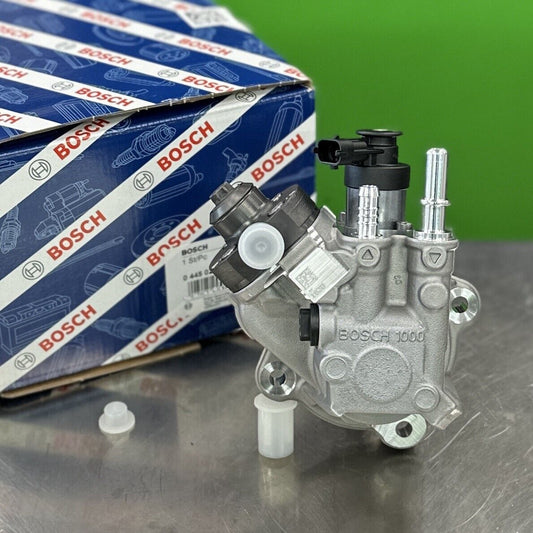
The CP4.2 is a radial-piston pump with two high-pressure cylinders (that's the ".2" — the CP4.1 is the single-cylinder version). Each cylinder holds a piston assembly — piston, roller tappet, plunger, and return spring — capped by a steel head with integrated low-pressure inlet, high-pressure check valve, and high-pressure outlet to the rail. A two-lobed camshaft drives both pistons, so each one compresses twice per revolution: four pressure strokes per turn.
Compared with the older CP3, the CP4.2 uses two pistons instead of three, moves roughly 20% less fuel volume, but runs higher peak pressure — up to 2,700 bar (about 39,000 psi) versus roughly 26,000 psi for the CP3. All high-pressure circuits are external, which lets Bosch use a compact aluminum case instead of the CP3's heavy forged housing. Bosch has built more than 60 million CP4-family pumps, and fuel delivery is metered on demand by a volume control valve (VCV — the same job the FCA/MPROP does on a CP3).
The failure mechanism
The CP4.2 is entirely fuel-lubricated, and the critical interface is where each roller tappet rides on its cam lobe — separated only by a film of diesel. Nothing in the design keys the piston to its bore.
That combination is the weak point. In a detailed teardown published by Diesel World with fuel-injection shop RCD Performance, the dominant root cause identified wasn't bad fuel or debris — it was air. Aerated fuel (from running the tank dry, an improperly installed fuel filter, or starting the engine before the system is fully primed) lets the piston assembly float and rotate in its bore. Once the roller tappet turns sideways to the cam lobe, the rolling contact becomes a hammering one. The tappet and cam lobe wear rapidly, shedding steel into the fuel — which the pump then pushes downstream into the rails and injectors, and through the return line all the way back to the tank.
That's why a CP4.2 failure is rarely just a pump replacement: it's typically pump, rails, lines, injectors, and a tank cleaning.
An early warning check
The first place debris shows up is the 80-micron screen on the volume control valve on the pump. Metal on that screen — or glitter in the fuel filter — means stop driving and diagnose before contamination spreads further.
Why Fords fail less often than LMLs
The 6.7L Power Stroke feeds its CP4.2 with an electric lift pump that maintains roughly 55–65 psi of supply pressure at all times, and sets a code if pressure sags. The LML Duramax has no electric lift pump — only a small gear pump on the back of the CP4.2 — so it's far more exposed to aeration. That difference tracks with the failure rates shops report.
Prevention that actually helps
- Never run the tank low, and buy fuel from high-volume stations.
- Install fuel filters correctly and prime fully before starting — then let the engine idle several minutes before accelerating. Revving to "push the air through" is the worst thing you can do to this pump.
- On lift-pump-less trucks (LML), an aftermarket electric lift pump addresses the root cause directly; a CP3 conversion is the more expensive route.
- Fuel lubricity additives help the fuel film at the tappet/cam interface.
Before you order: CP4.2 pumps, injectors, and contamination kits are application-specific. Verify the exact parts by OEM cross-reference for your engine and year.
If you're replacing a failed pump, plan the whole job: see our fuel pump collection, fuel contamination kits, and fuel injectors, or send us your engine details via the chat box and we'll confirm the right parts.
Share